
An Outside Perspective
The more digital the world becomes, the more I find myself seeking the analog. The faster everything moves, the more I am drawn to what is slow.
Perhaps it is simply a sign of the times. Or perhaps it is yet another version of myself emerging.
The more digital the world becomes, the more I find myself seeking the analog—the real, the tangible, the authentic. The faster everything moves, the more I am drawn to what is slow. And as the world grows louder, more expressive, and increasingly certain of itself, I find myself turning inward—towards stillness, contemplation, and the quiet practice of looking within.
Rather than always striving towards somewhere, I find unexpected bliss in being nowhere.
I have long claimed that I do my best work when I am not at work. My thoughts become longer and deeper. My mornings fill with curiosity and insight. Creativity seems to arrive with the first light of day, flourishing as naturally as the rising sun.
My first two books were born from decades spent advising executive teams and audiences seeking to navigate the digital era. They were stories about transformation—about organisations striving to adapt, evolve, and grow in a rapidly changing world.
Our new book is something entirely different. Not only due to our - Jens, mine and Toshiki’s - shared perspective on the new world order.
And not necessarily as a reaction to it, but as a counterbalance.
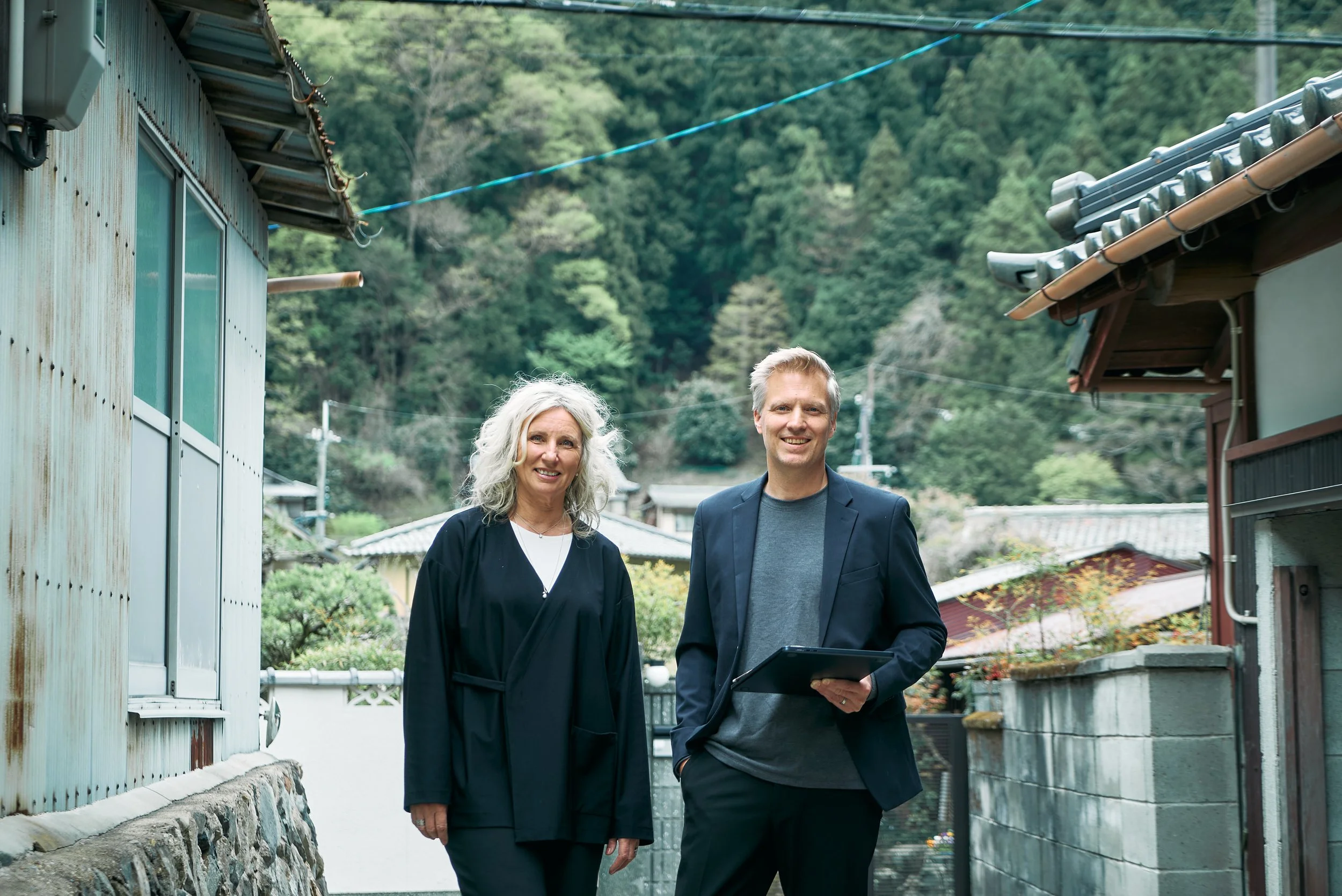
Because in order to be as ’brilliant and broken’* as we can be in the world; in order to see with clarity rather than through the comforting lens of misplaced certainty; we have come to believe that we need to slow down. We need to step outside. To create space. To cultivate a more intentional perspective. On the surface, this will be a book about the conversion of an old house on the outskirts of Kyoto.
But I suspect it will become something else.
And perhaps, of all the transformation work we have spoken and written about, this will likely prove to be the most important one.
*credit to Dale Hunter.

A New World Requires New Eyes
The challenge was never digital.
The challenge was adapting to a world reshaped by digital networks.
The challenge is not AI.
The challenge is adapting to a world reshaped by abundant intelligence.
Just as many companies struggled to move beyond industrial thinking during the rise of the internet and platform economy, many are now attempting to layer AI onto organizational models, operating structures and leadership approaches designed for a different world.
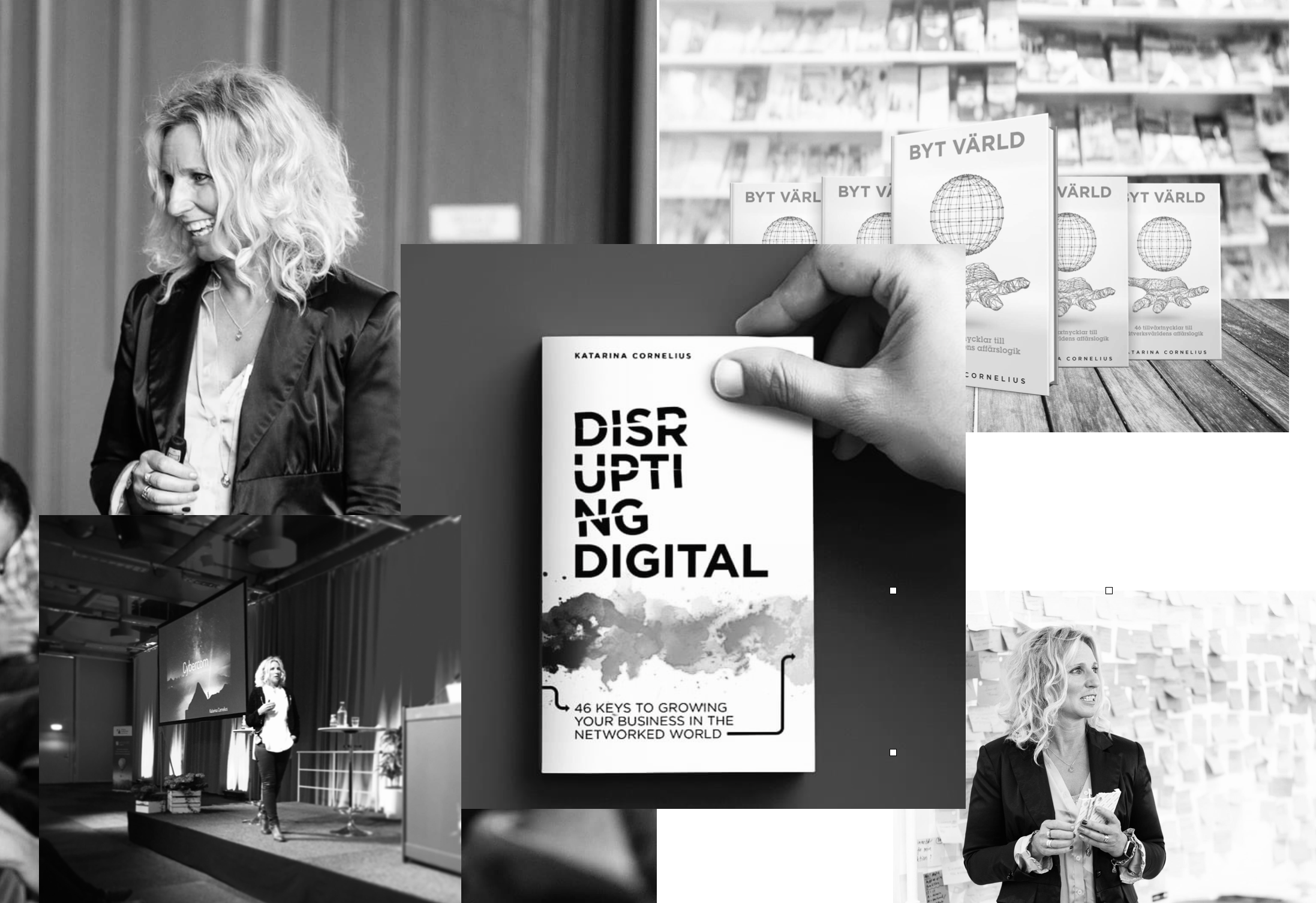
As I argued in my earlier work and books, Byt Värld (2016) and later Disrupting Digital (2018), meaningful transformation begins with understanding the new paradigm. The new rules of the game. The challenge was never digital technology in itself. The challenge was understanding how digital networks, platforms and connected data fundamentally changed how value was created, captured and exchanged.
Today, we find ourselves facing an even more profound shift. The challenge is not AI adoption. Nor is it simply a question of transformation.
Artificial intelligence, or - as we reframe it - abundant intelligence is reshaping how value is created, how organizations compete, and how leaders lead. It is challenging assumptions that have underpinned businesses, institutions and operating models for decades.
The question is no longer whether organizations can change. The question is whether they can build the capacity to continuously adapt as the rules of the game will keep changing.
Those who view AI as another technology initiative may improve incrementally. Those who understand the deeper implications have an opportunity to rethink how they create value, organize the work, and cleverly respond to a world where intelligence is becoming abundant.
Our role is to help leaders understand what is changing, align around what matters most, and create the momentum required to respond.
Not once.
But continuously.
The Invitation
Over the past two decades, we have had the privilege of working as — and with — leaders and organisations navigating periods of significant change. Some were responding to new technologies. Others to changing customer expectations, emerging competitors, regulatory shifts, mergers, globalisation, or entirely new business models. While the circumstances differed, the pattern was remarkably consistent…
Over the past two decades, we have had the privilege of working as — and with — leaders and organisations navigating periods of significant change. Some were responding to new technologies. Others to changing customer expectations, emerging competitors, regulatory shifts, mergers, globalisation, or entirely new business models.
While the circumstances differed, the pattern was remarkably consistent; despite good intentions, progress often fell stalled.
The challenge was rarely a lack of effort. Or, for that matter, intelligence.
People worked hard. Leadership teams cared deeply. Strategies were developed. Initiatives were launched. Yet progress often proved more difficult than expected. Over time, we came to realise that the obstacles were rarely technical. They were human, organisational and relational.
Not seeing clearly what mattered most.
Not moving in the same direction.
Not sustaining the commitment required when circumstances changed, priorities competed, and uncertainty increased.
Today, we find ourselves in the midst of another shift. Artificial intelligence is often presented as a technology question. In our view, it is something far larger.
Just as digitalisation challenged industrial assumptions about markets, customers and value creation, abundant intelligence is challenging assumptions about expertise, decision-making, leadership and organisational design. It also invites us to confront questions that are more personal than technological.
If intelligence is becoming abundant, what remains uniquely human? What becomes our source of value? Our sense of belonging? Our need for meaning, contribution and affirmation?
This is the conversation that ultimately led to Norbound. Not as a response to AI. Nor a response to any single technology shift.
But a response to a pattern we have observed repeatedly throughout our careers.
That transformation rarely fail because people do not care. But we struggle when clarity fades, alignment weakens, commitment fragments and momentum never quite took hold.
No matter what an abundantly intelligent world might provide, we believe the ability to see clearly, move together and remain committed to a shared direction will only become more important.
Not once.
But continuously.